
Environmental claims in international arbitration are often won or lost on narrow legal and evidentiary issues, rather than on the seriousness of the incident itself. The Niko Resources gas field arbitration illustrates this point.
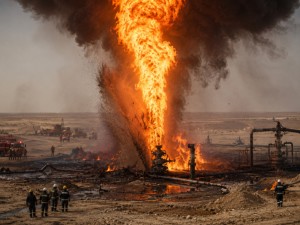 The dispute arose from two gas field blowouts in Bangladesh in 2005. In the arbitration, the tribunal found that Niko had breached its contractual obligations as operator in relation to the first blowout, but not the second. It also held that compensation was limited to direct loss and damage caused by the first blowout.[1] The final award ordered Niko Resources to pay approximately USD 42 million, far below the amount claimed.[2]
The case is significant because it separates three questions that are often treated together: whether there was an environmental incident, whether that incident resulted from a breach of contract and whether the claimed losses are legally recoverable.
Liability Turned on the Operator Standard
The tribunal did not assess Niko’s conduct by reference to general notions of environmental responsibility. It examined the contractual standard applicable to Niko as operator, including the prudent operator standard and relevant petroleum industry practice.[3]
Environmental liability will often depend less on broad environmental policy than on the precise obligations assumed in the project contract. A tribunal will typically ask what the operator was required to do, what technical standard applied and whether the evidence shows a departure from that standard.
This makes the drafting of operator obligations particularly important. Clauses referring to prudent practice, industry standards, safety procedures and environmental duties may later define the scope of liability.
Causation Limited the Claim
In its decision on liability, the tribunal’s distinction between the first and second blowouts is legally important. It found that the first blowout was caused by Niko’s breach, but that the second was not caused by any breach by Niko.[4]
This shows that environmental liability in arbitration does not necessarily follow the chronology of events. A later incident may appear connected to an earlier failure, but it will not be compensable unless the claimant proves the required causal link.
This is often decisive in complex energy disputes. Technical evidence on drilling decisions, reservoir conditions, well control, gas migration and remediation may determine whether a loss is attributable to the respondent’s breach or to another cause.
Recoverable Loss Was Narrower Than Alleged Loss
The tribunal’s decision on heads of recoverable loss further narrowed the dispute. It allowed certain categories of loss to proceed, including gas losses and environmental loss and damage caused by the first blowout, to the extent not already compensated. It rejected other categories, including alleged loss of production from the reservoir and alleged loss caused by increased arsenic in drinking water.[5]
The tribunal also rejected a claim for advance payment of a monitoring, surveying and abatement programme.[6] It distinguished between the cost of establishing whether loss exists and the compensable loss itself.[7]
A claimant should not assume that investigation, monitoring or future risk will automatically be treated as compensable damage. Each head of loss must be tied to a legal entitlement, causation and proof of amount.
The Award Shows the Importance of Framing the Claim
The Niko Resources arbitration suggests that environmental claims should be framed with care from the outset. A broad claim for environmental harm may be less effective than a structured claim identifying each compensable head of loss, the contractual basis for recovery, the causal pathway and the method of valuation.
For respondents, the same structure provides the basis for defence. The respondent may test whether the claim is direct or indirect, whether it falls within the contractual allocation of risk, whether it has already been compensated and whether the expert evidence proves the amount claimed.
Conclusion
The Niko Resources case is not only a reminder that environmental incidents can lead to international arbitration. Its more useful lesson is that environmental liability may be narrowed substantially by contract interpretation, causation and the law of damages.
For parties in energy, oil and gas, mining and infrastructure projects, the legal focus should be precise: define the operator standard, preserve technical evidence, separate each head of loss and prove the causal link between breach and damage.
[1] Niko Resources (Bangladesh) Ltd. v. Bangladesh Petroleum Exploration & Production Company Limited and Bangladesh Oil Gas and Mineral Corporation, ICSID Case Nos. ARB/10/11 and ARB/10/18, Decision on Liability, 28 February 2020, para. 1159.
[2] Niko Resources (Bangladesh) Ltd. v. Bangladesh Petroleum Exploration & Production Company Limited and Bangladesh Oil Gas and Mineral Corporation, ICSID Case No. ARB/10/11, Award, 18 December 2025, para. 375; T. Fisher, Bangladeshi state entity wins limited damages over gas field blowout, 2 February 2026, https://globalarbitrationreview.com/article/bangladeshi-state-entity-wins-limited-damages-over-gas-field-blowout (last accessed 6 May 2026); Daily Star, Tengratila blowouts: Niko ordered to pay $42m against claim of $1b, 31 January 2026, https://www.thedailystar.net/news/bangladesh/accidents-fires/news/tengratila-blowouts-niko-ordered-pay-42m-against-claim-1b-4094606 (last accessed 6 May 2026).
[3] Niko Resources, Decision on Liability, paras. 344-365, 476-477.
[4] Id., para. 1159.
[5] Niko Resources (Bangladesh) Ltd. v. Bangladesh Petroleum Exploration & Production Company Limited and Bangladesh Oil Gas and Mineral Corporation, ICSID Case Nos. ARB/10/11 and ARB/10/18, Decision on Heads of Recoverable Loss, 18 May 2021, paras. 773-778.
[6] Id., para. 778.
[7] Id., paras. 643-646.
