
Disputes over critical assets now drive many international arbitrations. Ports, airports, energy projects, mining assets, data centres, telecom networks and transport corridors are no longer purely commercial assets. States increasingly link them to national security, economic sovereignty, supply chains and geopolitical influence.
The Panama Canal ports dispute shows this trend clearly. Panama Ports Company, a subsidiary of CK Hutchison Holdings, operated the Balboa and Cristóbal ports for decades. These ports sit at the entrances to the Panama Canal. In 2026, Panama’s Supreme Court declared the relevant concession unconstitutional. The government then seized control of the two ports.[1]
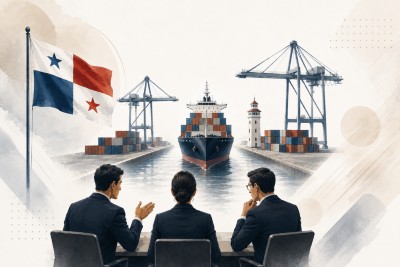 Panama Ports Company then started international arbitration against Panama. It seeks more than USD 2 billion in damages.[2] It also reportedly started separate arbitration proceedings in London against Maersk. It alleges that Maersk joined a scheme to take over the port operations.[3]
The merits remain undecided. Even so, the dispute already matters to foreign investors, general counsel, infrastructure funds and companies in sensitive sectors. It shows how fast a long-term concession can become a dispute with the State.
The Significance of the Panama Canal Ports Dispute
The Panama Canal is one of the world’s most important trade routes. The ports at Balboa and Cristóbal are not ordinary commercial assets. They sit at two key points of global maritime trade. They also connect directly to supply chains, shipping routes and cross-border commerce.
Recent materials state that Panama Ports Company had operated the ports since 1997. Panama renewed the concession in 2021 for another 25 years.[4] The dispute escalated after the Supreme Court ruling. Panama then ordered the occupation of the terminals and related assets. These included cranes, vehicles, computer systems and software.[5]
The case raises issues that often appear in infrastructure arbitration. Did government control amount to unlawful expropriation? Can a domestic court decision justify interference with a concession? What compensation is due when a State terminates or neutralises a project? How can investors protect themselves before entering sensitive markets?
The same questions may arise in other sectors, including electricity grids, renewable energy, oil and gas, mining, railways, toll roads, airports and digital infrastructure.
State Intervention and Infrastructure Arbitration
Governments can intervene in strategic sectors in many ways. They may cancel licences, terminate concessions, impose new taxes or order local control. They may also change tariff structures, restrict foreign ownership or transfer operations to entities appointed by the State.
Some measures may be lawful. States may regulate, protect public interests and enforce domestic law. However, they may breach international obligations when they go too far. This can happen when they violate contracts, investment treaties, expropriation standards or fair and equitable treatment.
For investors, the Panama Canal ports arbitration offers a clear reminder. Investors should assess more than the commercial value of a project. They should also review the legal stability of the concession. The sensitivity of the asset also matters. So do the arbitration clause and available treaty protection.
Why Geopolitics Increases Arbitration Risk
Geopolitics shapes arbitration risk. An asset may look commercially ordinary at the start. Years later, a State may view it through a security or foreign influence lens. Supply chain control and competition between major powers can also change the risk profile.
Public transaction materials link the Panama Canal ports dispute to wider geopolitical concerns. These include the proposed sale of certain CK Hutchison port assets to a consortium involving BlackRock.[6]
The lesson for international investors is practical. A port concession, mining licence, energy project or telecom asset may attract scrutiny years later. That scrutiny may follow changes in diplomacy, security policy, trade policy or domestic politics.
Investors should treat political risk as legal risk from the start.
Lessons for Foreign Investors and Executives
Foreign investors should review treaty protection before making an investment. Treaty planning works best before a dispute arises. Later restructuring may face challenges once a dispute has crystallised.
Investors should also draft arbitration clauses carefully. The clause should identify the seat, rules, language and number of arbitrators. It should also define the disputes covered.
Long-term infrastructure contracts need clear protections. These should cover early termination, State takeover, change in law and political force majeure. They should also address valuation and compensation for lost profits where appropriate.
Investors should also preserve evidence from the start. This includes communications with ministries, regulators, port authorities, local partners, lenders and contractors.
Political risk insurance may also help in high-value projects. It can cover risks such as expropriation, currency restrictions, political violence and State breach of contract.
Together, these protections can matter greatly when a project becomes political. In sensitive sectors, investors should build legal protection into the investment structure. They should also build it into the concession agreement and dispute strategy.
Conclusion
The Panama Canal ports dispute shows how intervention in critical infrastructure can trigger high-value international arbitration. It also shows that ports, logistics assets and public concessions face growing pressure. That pressure may come from regulation, geopolitics or sudden policy changes.
Strong arbitration clauses, treaty planning and careful contract drafting can improve an investor’s position. Political risk analysis and early evidence preservation can also make a major difference.
Strategic assets can generate strong returns. They can also create serious arbitration risk. The best-protected companies identify political and legal exposure before they commit capital.
[1] Ministerio de la Presidencia de la República de Panamá, Fallo de inconstitucionalidad del contrato de puertos de Balboa y Cristóbal se publica en Gaceta Oficial, 23 February 2026, https://www.presidencia.gob.pa/publicacion/fallo-de-inconstitucionalidad-del-contrato-de-puertos-de-balboa-y-cristobal-se-publica-en-gaceta-oficial- (last accessed 26 May 2026); Gaceta Oficial Digital, Decreto Ejecutivo No. 23, 23 February 2026, https://www.gacetaoficial.gob.pa/storage/gacetas/2026/02/30468_A/GacetaNo_30468a_20260223.pdf (last accessed 26 May 2026).
[2] Panama Ports Company, S.A., Panama Ports Company Expands Claims Against the Republic of Panama One Month After the State’s Unlawful Takeover of Ports and Property, 24 March 2026, https://www.ckh.com.hk/upload/attachments/en/pr/PPCstatement_20260324_e.pdf (last accessed 26 May 2026) (stating that Panama Ports Company expanded its international arbitration claims against Panama and that damages had escalated beyond United States dollars 2 billion).
[3] Panama Ports Company, S.A., Panama Ports Company Files Arbitration Against Maersk Following Alignment with the Republic of Panama and Port Takeover in Panama, 7 April 2026, https://www.ckh.com.hk/upload/attachments/en/pr/PPC_PressStatement_7April2026_e.pdf (last accessed 26 May 2026) (stating that Panama Ports Company commenced arbitration proceedings against Maersk in London).
[4] Gaceta Oficial Digital, Corte Suprema de Justicia, Fallo de la Corte No. S/N, 29 January 2026, https://www.gacetaoficial.gob.pa/storage/gacetas/2026/02/30468/GacetaNo_30468_20260223.pdf (last accessed 26 May 2026) (declaring unconstitutional Law No. 5 of 16 January 1997 and the 2021 extension and related acts concerning the Panama Ports Company concession).
[5] Gaceta Oficial Digital, Decreto Ejecutivo No. 23, 23 February 2026, https://www.gacetaoficial.gob.pa/storage/gacetas/2026/02/30468_A/GacetaNo_30468a_20260223.pdf (last accessed 26 May 2026) (ordering temporary occupation by the Autoridad Marítima de Panamá of movable property, including cranes, vehicles, computers, software and other assets necessary to maintain the continuous and safe operation of the ports of Balboa and Cristóbal).
[6] CK Hutchison Holdings Limited, BlackRock Inc., Global Infrastructure Partners and Terminal Investment Limited and CK Hutchison Holdings Limited, Announcement of “in Principle” Agreements Regarding Certain Ports Owned and Operated by Hutchison Port Holdings, 4 March 2025, https://www.ckh.com.hk/en/media/press_each.php?id=3431 (last accessed 26 May 2026) (announcing that the BlackRock TiL Consortium had reached in principle agreements to acquire HPH’s 90% interests in Panama Ports Company, which owns and operates the ports of Balboa and Cristóbal).
