More than four decades after the Tehran hostage crisis, arbitration may offer Iran a legal pathway to challenge the United States’ latest military campaign.
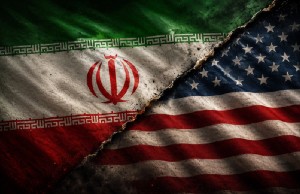 On 28 February 2026, the United States, together with Israel, launched a large-scale military operation against the Islamic Republic of Iran under the name “Operation Epic Fury”.[1] The United States has sought to justify its actions as an exercise of self-defence, both individually and collectively. Yet beyond the jus ad bellum debate, the operation raises a largely overlooked question: could these actions constitute a breach of the 1981 Algiers Accords, and, if so, is there any viable legal forum for Iran to pursue such a claim?
The Algiers Framework and the Iran-United States Claims Tribunal
The Declaration of the Government of the Democratic and Popular Republic of Algeria Concerning the Settlement of Claims by the Government of the United States of America and the Government of the Islamic Republic of Iran (the “Claims Settlement Declaration”) and the Declaration of the Government of the Democratic and Popular Republic of Algeria (the “General Declaration”) (together the “Algiers Accords”), concluded on 19 January 1981, brought an end to the hostage crisis in Tehran and established a legal framework governing relations between the United States and Iran. Central to that framework is the Iran-United States Claims Tribunal (“IUSCT”), which sits in The Hague and was created to resolve disputes arising out of the crisis and its aftermath, including claims by nationals of each State against the other.[2]
The IUSCT website notes that under the Algiers Accords, “[c]laims had to be filed with the Tribunal by 19 January 1982, and their number is therefore finite.”[3]
However, while Article III(4) of the Claims Settlement Declaration imposed strict temporal limits on the filing of claims, these limits explicitly do not apply to disputes arising under paragraphs 16 and 17 of the General Declaration.[4] Paragraph 17 is particularly significant: it provides that “[i]f any other dispute arises between the parties as to the interpretation or performance of any provision of this Declaration, either party may submit the dispute to binding arbitration” before the Tribunal.[5] Article II(3) of the Claims Settlement Declaration confirms that the Tribunal has jurisdiction over such disputes.[6]
In principle, therefore, the IUSCT remains a potentially available forum for inter-State disputes concerning the interpretation or performance of the Algiers Accords, notwithstanding the passage of time.
The Non-Intervention Commitment
At the heart of the present controversy lies Point I of the General Declaration, under which the United States pledged that it “is and from now on will be the policy of the United States not to intervene, directly or indirectly, politically or militarily, in Iran’s internal affairs.”[7]
While the United States would likely argue that this provision simply acts as a policy assurance rather than a binding commitment, the fact that paragraph 17 of the same document provides legal recourse through binding arbitration for “any other dispute […] between the parties as to the interpretation or performance of any provision of this Declaration”[8] suggests that Point I was intended to have legal effect. Further, United States courts have consistently treated the Algiers Accords as legally binding and enforceable instruments.[9]
The United States might further contend that any obligation was confined to the immediate post-hostage crisis context in which the Algiers Accords were concluded. However, the text of Point I, particularly the phrase “is and from now on will be”,[10] appears to establish an indefinite forward-looking obligation for the United States not to intervene, directly or indirectly, by political or military means, in Iran’s internal affairs from the date of the Declaration’s entry into force.
There is little doubt that the United States has engaged in direct military action on Iranian territory since its signature, particularly within the context of “Operation Epic Fury”. Reports indicate that more than 13,000 targets were struck over 39 days.[11] The legal question, however, is not merely whether force was used, but whether such force constitutes intervention “in Iran’s internal affairs” within the meaning of the Declaration.
Intervention in International Law: The Centrality of Coercion
The IUSCT has recognised that the Algiers Accords are governed by the standards of international law set forth in the Vienna Convention on the Law of Treaties (“VCLT”).[12]
With regard to the ordinary meaning of the relevant terms under Article 31(1) VCLT,[13] the verb “to intervene” ordinarily denotes interference in the affairs of another entity, particularly through coercive or intrusive means. Likewise, the phrase “internal affairs” naturally encompasses matters relating to a State’s domestic political organisation and governance. Read in their ordinary sense, these terms readily support an interpretation of Point I as prohibiting coercive attempts to influence Iran’s internal political order.
Under Article 31(3)(c) of the VCLT, relevant rules of international law applicable between the parties may also be taken into account in interpreting treaty terms. Accordingly, the meaning of “intervention” and “internal affairs” in Point I would likely be informed by the principle of non-intervention, which is well-developed in customary international law.
The 1965 United Nations Declaration on the Inadmissibility of Intervention in the Domestic Affairs of States and the Protection of their Independence and Sovereignty affirms that “[n]o State has the right to intervene, directly or indirectly, for any reason whatever, in the internal or external affairs of any other State,” and specifically condemns armed intervention “against the personality of the State or against its political, economic and cultural elements”.[14] The 1970 Declaration on the Principles of International Law Concerning Friendly Relations and Co-operation Among States in Accordance with the Charter of the United Nations features similar text.[15]
The International Court of Justice, in Nicaragua v. United States, has clarified that under customary law rules, intervention is unlawful where it involves coercion in matters reserved to a State’s sovereign discretion, such as the choice of political, economic, or social system. The Court emphasised that “the element of coercion […] forms the very essence of prohibited intervention”.[16]
While the United States has acted in the past as though the exportation of “democracy” and regime change do not qualify as interference (see the 1998 U.S.-Iraq Liberation Act, which called for the United States to “support efforts to remove the regime headed by Saddam Hussein from power in Iraq and to promote the emergence of a democratic government to replace that regime”),[17] subsequent international jurisprudence has reinforced this understanding. In DRC v. Uganda, the International Court of Justice reiterated that intervention may occur “with or without armed force,” particularly where it supports internal opposition or interferes in a State’s domestic political processes.[18]
Does “Operation Epic Fury” Constitute Intervention in Internal Affairs?
The United States would likely argue that its actions fall outside the scope of “internal affairs” because they are directed at external threats, including Iran’s nuclear ambitions and regional military activities. Framed in this way, the operation would be characterised, as it has been publicly, as an exercise of self-defence rather than an attempt to influence Iran’s internal political order.
However, this distinction becomes difficult to sustain in light of both the scale and apparent objectives of the operation. The assassination of top Iranian government officials, including Iran’s supreme leader, Ayatollah Ali Khamenei,[19] coupled with public statements from United States leadership calling on the Iranian population to “take over your government” and describing the operation as a moment to “seize control of your destiny”[20] suggests at least an intention to influence, if not fundamentally alter, Iran’s political system, in breach of the obligation of non-intervention.[21]
Moreover, Andreas Zimmermann suggests that “even if the military action was exclusively aiming at combating a claimed security threat emanating from Iran’s nuclear program it would nevertheless have interfered at the same time with Iran’s own domestic energy and defense policy choices, and thus constituted a generally prohibited intervention”.[22] Therefore, reports indicating that civilian infrastructure, such as hospitals, schools and fuel depots, has been targeted in the latest strikes, which would arguably affect Iranian domestic health, education, and energy policy, may give Iran an even more compelling claim against the United States.[23]
While some commentators have argued in favour of doctrines such as humanitarian intervention or even regime change in exceptional circumstances, these remain highly contested and far from established in customary international law. The prevailing view continues to reject the permissibility of coercive interference in a State’s internal political order.[24]
Jurisdictional and Enforcement Realities
Even if a breach of the Algiers Accords could be established, significant practical obstacles remain.
The IUSCT appears, at least on paper, to offer a viable forum. As noted above, paragraph 17 of the General Declaration explicitly allows either party to submit disputes concerning interpretation or performance, and does not impose a temporal limitation. The Tribunal also has the authority to award damages, and its decisions are, in principle, enforceable in the courts of third States.
However, the effectiveness of this mechanism depends on the willingness of the respondent State to participate in proceedings and to comply with any resulting award. Given the current geopolitical context and the apparent scepticism of the present United States administration towards international adjudication and international law in general,[25] compliance cannot be taken for granted.
Additionally, enforcing any award obtained by Iran against the United States in a third country would place that third country in a diplomatically sensitive position, as its courts would have to balance legal obligations with the risk of straining relations with a major power.
Alternative fora offer little prospect. The International Court of Justice lacks jurisdiction absent United States consent, which was withdrawn in 1985 and is unlikely to be re-established for the purposes of a dispute with Iran.[26] Recourse to the United Nations Security Council is similarly constrained by the United States’ veto power under Article 27(3) of the UN Charter.[27]
Conclusion
The Algiers Accords, born out of one of the most acute crises in American-Iranian relations, continue to impose legal obligations that may be directly relevant to contemporary hostilities. The United States’ commitment not to intervene in Iran’s internal affairs raises serious questions in light of “Operation Epic Fury”, particularly where the use of force appears intertwined with efforts to influence Iran’s political trajectory or target civilian infrastructure.
Yet the enduring challenge is not merely one of legal interpretation, but of enforcement. The architecture of international dispute settlement offers avenues in theory, but few in practice, where major powers are unwilling to submit to adjudication or comply with adverse decisions.
In that sense, the present situation underscores a familiar tension in international law: the persistence of legal norms, even as the mechanisms for their enforcement remain contingent on political will.
[1] R. Rubenstein, Operation Epic Fury and International Law, 21 April 2026, https://www.state.gov/releases/office-of-the-legal-adviser/2026/04/operation-epic-fury-and-international-law#_ftnref3 (last accessed 7 May 2026).
[2] IUSCT, Iran-United States Claims Tribunal: About, https://iusct.com/about/ (last accessed 5 May 2026).
[3] IUSCT, Iran-United States Claims Tribunal: About, https://iusct.com/about/ (last accessed 5 May 2026).
[4] Declaration of the Government of the Democratic and Popular Republic of Algeria Concerning the Settlement of Claims by the Government of the United States of America and the Government of the Islamic Republic of Iran dated 1981 (“Claims Settlement Declaration”), Art. III(4).
[5] Declaration of the Government of the Democratic and Popular Republic of Algeria dated 19 January 1981 (“General Declaration”), para. 17.
[6] Claims Settlement Declaration, Art. II(3).
[7] General Declaration, para. 1.
[8] General Declaration, para. 17.
[9] See Belk v. United States, 858 F.2d 706 (Fed. Cir. 1988).
[10] General Declaration, para. 1.
[11] M. Cancian and C. Park, Last Rounds? Status of Key Munitions at the Iran War Ceasefire, 21 April 2026, https://www.csis.org/analysis/last-rounds-status-key-munitions-iran-war-ceasefire (last accessed 7 May 2026).
[12] United States of America v. Islamic Republic of Iran, IUSCT Case No. A28 (130-A28,FT), Award, 19 December 2000, para. 53.
[13] Vienna Convention on the Law of Treaties, 1969, Art. 31(1).
[14] G.A. Res. 2131 (XX), Declaration on the Inadmissibility of Intervention in the Domestic Affairs of States and the Protection of Their Independence and Sovereignty (21 December 1965), para. 1.
[15] G.A. Res. 2625 (XXV), Declaration on Principles of International Law Concerning Friendly Relations and Co-Operation Among States in Accordance with the Charter of the United Nations (24 October 1970), Principle 3(1). While at the time the United States voted in favour of the 1965 declaration, it declared at the time of its adoption that it considered it to be only a statement of political intention and not a formulation of law, it did not make such a reservation with regard to the 1970 declaration. Case Concerning Military and Paramilitary Activities In and Against Nicaragua (Nicaragua v. United States of America), Judgment, 27 June 1986, I.C.J. Reports 1986, para. 203.
[16] Case Concerning Military and Paramilitary Activities In and Against Nicaragua (Nicaragua v. United States of America), Judgment, 27 June 1986, I.C.J. Reports 1986, para. 205.
[17] M. Wood, Non-Intervention (Non-interference in domestic affairs), 2026, https://pesd.princeton.edu/node/551 (last accessed 7 May 2026); Iraq Liberation Act of 1998, Pub. L. No. 105-338, sec. 3.
[18] Case Concerning Armed Activities on the Territory of the Congo (Democratic Republic of the Congo v. Uganda), Judgment, 19 December 2005, I.C.J. Reports 2005, para. 164.
[19] J. Burke, ‘Sixty seconds, that’s all it took’: the clinical Israeli-US operation to kill Ali Khamenei, 1 March 2026, https://www.theguardian.com/world/2026/mar/01/how-israeli-sleight-and-us-might-led-to-the-assassination-of-ali-khamenei (last accessed 7 May 2026).
[20] J. Magid, Trump indicates goal of Iran strikes is to topple regime; tells Iranian people: ‘When we’re finished, take over your government’, 28 February 2026, https://www.timesofisrael.com/liveblog_entry/trump-indicates-goal-of-iran-strikes-is-to-topple-regime-tells-iranian-people-when-we-are-finished-take-over-your-government/ (last accessed 7 May 2026).
[21] W. Hamdach, The War Against Iran and Global Risks: “Tell Me How This Ends”, 26 March 2026, https://gjia.georgetown.edu/conflict-security/the-war-against-iran-and-global-risks-tell-me-how-this-ends/ (last accessed 7 May 2026).
[22] A. Zimmermann, The Iran-US Claims Tribunal and the Recent US Military Operations against Iran, 30 June 2025, https://www.ejiltalk.org/the-iran-us-claims-tribunal-and-the-recent-us-military-operation-against-iran/ (last accessed 7 May 2026).
[23] G. Golshiri and L. Imbert, US and Israel increasingly target Iran’s civilian infrastructure, 4 April 2026,https://www.lemonde.fr/en/international/article/2026/04/05/us-and-israel-increasingly-target-iran-s-civilian-infrastructure_6752133_4.html (last accessed 7 May 2026); G. Golshiri and M. Zerrouky, Bombing of civilian infrastructure aims to bring Iran to its knees, 11 March 2026, https://www.lemonde.fr/en/international/article/2026/03/11/bombing-of-civilian-infrastructure-aims-to-bring-iran-to-its-knees_6751333_4.html (last accessed 7 May 2026).
[24] M. Wood, Non-Intervention (Non-interference in domestic affairs), 2026, https://pesd.princeton.edu/node/551 (last accessed 7 May 2026).
[25] R. Mohanty and P. Ranjan, Trump 2.0: A Disruptive Peripeteia for International Law, 21 April 2026, https://www.orfonline.org/research/trump-2-0-a-disruptive-peripeteia-for-international-law (last accessed 7 May 2026).
[26] J. Sokol, The Jurisdiction of the International Court of Justice, 21 August 2025, https://www.congress.gov/crs-product/IG10085 (last accessed 7 May 2026).
[27] Security Council Report, The Veto, 19 February 2024, https://www.securitycouncilreport.org/un-security-council-working-methods/the-veto.php (last accessed 7 May 2026).
