

On 4 March 2026, the Supreme Court of the United Kingdom (the “Supreme Court”) held in Kingdom of Spain v Infrastructure Services Luxembourg S.À.R.L. and Republic of Zimbabwe v Border Timbers Ltd that Spain and Zimbabwe (the “States”) could not invoke state immunity to resist the registration in England of ICSID awards rendered against them. The […]
News
Singapore’s High Court Rejects Spain’s State Immunity Defence (NextEra Energy v Spain [2026] SGHC 43)

In NextEra Energy Global Holdings B.V. and NextEra Energy Spain Holdings B.V. v Kingdom of Spain [2026] SGHC 43 (“NextEra v Spain”), the High Court of Singapore held that Spain was not entitled to state immunity in proceedings to register and enforce an award rendered under the Convention on the Settlement of Investment Disputes between […]
Devas v. Antrix: Dutch Enforcement and the Limits of Seat-Based Annulment

With the Dutch Supreme Court’s 6 March 2026 dismissal of Antrix’s cassation challenge, attention has once again turned to one of the most closely watched India-linked arbitration disputes in recent years. The dismissal leaves in place the Hague Court of Appeal’s 17 December 2024 judgment in Devas Multimedia America Inc. v. Antrix Corporation Ltd., permitting […]
Aceris Law Ranked Again in Legal 500 2026 for International Arbitration

Aceris Law is proud to announce that it has once again been ranked in the Legal 500 for 2026, reaffirming its position as a leading boutique law firm in international arbitration. This recognition highlights the firm’s continued excellence in delivering high-quality, efficient, and results-oriented representation to clients across the globe. A Global Arbitration Practice While […]
The Iran Conflict and Arbitration Disputes

In addition to its human toll, the current conflict involving Iran creates immediate commercial and legal challenges for companies operating in the Middle East. It directly affects contract performance, payment flows, shipping, energy supply and dispute resolution. In sectors such as energy, infrastructure, commodities and maritime transport, these impacts are already tangible, appearing in delayed […]
Arbitration Updates: Malaysia’s 2026 Arbitration Reform

Malaysia’s arbitration framework has undergone significant reform with effect from 1 January 2026, when the Arbitration (Amendment) Act 2024 (the “2024 Act”) entered into force and introduced substantial changes to the Arbitration Act 2005 (as previously amended) (the “2005 Act”). At the same time, Malaysia’s principal arbitral institution, the Asian International Arbitration Centre (Malaysia) (the […]
Import of Sigma Constructores, S.A. v. Republic of Guatemala

The enforcement of arbitral awards against sovereign states in the United States is governed by a carefully structured statutory framework rooted in the New York Convention, and its implementation through Chapter 2 of the Federal Arbitration Act and the Foreign Sovereign Immunities Act of 1976 (FSIA). An arbitral award, although binding, does not automatically carry […]
What Options Remain for Investor-State Arbitration Under the ECT?
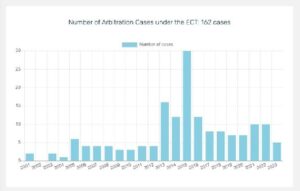
This note deals with the current legal framework of investor-State arbitration under the Energy Charter Treaty (the “ECT”). The landscape of the application of the ECT has become blurry after several major developments in recent years: withdrawals, modernisation of the ECT, not to mention the impact of the Komstroy decision,[1] which has by no means […]
London Commercial Court: ICSID Awards Are Not Assignable (Operafund v Spain)

In Operafund Eco-Invest SICAV Plc and Schwab Holding AG v Kingdom of Spain [2025] EWHC 2874 (Comm), the English Commercial Court held that awards rendered under the Convention on the Settlement of Investment Disputes between States and Nationals of Other States (“ICSID Convention”) or the Energy Charter Treaty 1994 (“ECT”) are not assignable to third […]
