
Witness evidence can be decisive in international arbitration. Tribunals regularly rely on company representatives, employees, experts and other witnesses to determine what happened and, in many cases, to determine how much loss was suffered. But what happens when a witness deliberately lies? The consequences can extend well beyond the loss of credibility. Depending on the […]
Switzerland Arbitration
Aceris Law Secures Another Decisive Victory in an ICC Arbitration Under Swiss Law

Aceris Law is pleased to announce the successful representation of a Croatian company in an ICC arbitration against an Italian counterparty arising from a major industrial construction project in the energy and petrochemical sector in Croatia. The Arbitral Tribunal issued a final award fully upholding the client’s claims, awarding the vast majority of costs in […]
Liquidated Damages and Penalty Clauses in International Arbitration

In international contracts, parties seek above all predictability and effective control of risk. One of the most powerful contractual mechanisms to achieve both objectives is to include a pre-agreed damages clause, commonly referred to as a liquidated damages or penalty clause. Such provisions fix in advance the sum payable where a party fails to perform […]
Confidentiality in International Arbitration
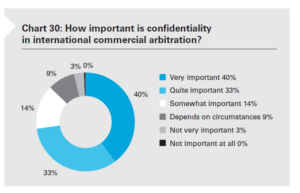
Traditionally, confidentiality is one of the perceived advantages of international arbitration as opposed to State court proceedings.[1] The underlying rationale behind confidentiality in international arbitration comes from the need to ensure a “dispassionate dispute resolution process” between the parties.[2] In fact, parties choose international arbitration in order to benefit from a unified, neutral, efficient, and […]
Sovereign Immunity in Switzerland

The doctrine of sovereign immunity can be traced back to early international law theories. Traditionally, sovereign immunity was considered absolute, meaning that states could not be sued under any circumstances. However, as international relations and state involvement in commerce expanded, many countries, including Switzerland, adopted a restrictive approach. This distinction allows legal actions against states […]
Arbitration and the Revised Swiss Private International Law Act

The Swiss Private International Law Act (“PILA”), codified in the Federal Act on Private International Law of 18 December 1987, is likely the most complete codification of private international law in the world. Initially introduced in Swiss legislation to strengthen Switzerland’s position in the field of international law, the PILA was recently revamped to accommodate […]
Arbitration in Switzerland

Switzerland is among the most preferred seats for arbitration, as revealed by an international Survey from 2018.[1] Its attractivity stems from factors such as its political neutrality, the well-established legal framework, the qualified arbitration practitioners, and its efficient institutions. Some key points relevant to the choice of Switzerland as a seat of arbitration will be […]
An Introduction to the ASA Arbitration Toolbox

In June 2021, the Swiss Arbitration Association (“ASA”) published the ASA Arbitration Toolbox, a free, interactive platform that guides users through the various steps of an international commercial arbitration via the help of questionnaires, diagrams, practical tips, as well as downloadable sample documents. The ASA Arbitration Toolbox is available online here. In order to access […]
Revised 2021 Swiss Arbitration Rules
The newly-revised 2021 Swiss Rules of International Arbitration (“2021 Swiss Rules”) took effect on 1 June 2021 and apply to all arbitrations commencing on or after that date, superseding the 2012 version previously in force, unless the parties otherwise agree. Originally enacted on 1 January 2004, and having undergone only one revision in 2012, the […]
