

Witness evidence can be decisive in international arbitration. Tribunals regularly rely on company representatives, employees, experts and other witnesses to determine what happened and, in many cases, to determine how much loss was suffered. But what happens when a witness deliberately lies? The consequences can extend well beyond the loss of credibility. Depending on the […]
France Arbitration
Transnational Issue Estoppel in International Arbitration: Can It Prevent Re-Litigation at the Enforcement Stage?

International arbitration is valued for delivering final, binding, and enforceable awards, but that finality is threatened when losing parties seek to re-litigate the same objections across multiple jurisdictions. A party may challenge an award at the seat and fail. It may then attempt to resist enforcement elsewhere by recasting the same arguments. This is where […]
French Court of Cassation Limits Enforcement Against State-Linked Assets Where EU Stability Objectives Are at Stake

On 17 June 2026, the First Civil Chamber of the French Cour de cassation (“Court of Cassation”) (English version of decision here) drew an important boundary around enforcement against assets of State-linked entities. The Court accepted the general French-law principle that a creditor of a foreign State may, in certain circumstances, enforce against assets held […]
Can Claimants Avoid Arbitration by Adding Non-Signatory Defendants?

Arbitration clauses are not always challenged directly. Often, the challenge is more subtle: a claimant brings court proceedings against both the contractual counterparty and an additional defendant who never signed the arbitration agreement, i.e., a non-signatory or third party. The question then becomes whether that party structure is enough to keep the dispute in court. […]
Confidentiality in International Arbitration
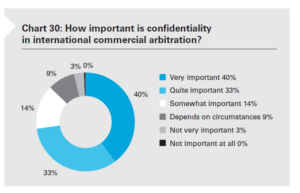
Traditionally, confidentiality is one of the perceived advantages of international arbitration as opposed to State court proceedings.[1] The underlying rationale behind confidentiality in international arbitration comes from the need to ensure a “dispassionate dispute resolution process” between the parties.[2] In fact, parties choose international arbitration in order to benefit from a unified, neutral, efficient, and […]
Can Arbitrators Promote Settlement in Arbitration?

Parties can always attempt to settle their dispute in an amicable manner, even if the dispute has been referred to arbitration.[1] However, different opinions emerge regarding the arbitrators’ role in the settlement process. Certainly, arbitrators may facilitate settlement indirectly. As stated by Kaufmann-Kohler, arbitrators “can simply ask a few well-targeted questions at the right time, […]
Arbitration and Third Parties: The Issue of Non-Signatories

Arbitration and third parties is a topic which, over and above its academic relevance, has important practical implications for parties in international arbitration proceedings. The issue of arbitration and third parties may concern situations where a party wishes to refer to arbitration another party that was not part of the main contract and therefore did […]
The Annulment of International Arbitral Awards Rendered in France

The annulment of an arbitral award may be pursued by parties involved in an international arbitration conducted in France, allowing them to challenge the award’s validity through a dedicated annulment process. Parties can initiate the French annulment process exclusively against international arbitral awards rendered in France. They may not use this procedure against international arbitral […]
Document Production in International Arbitration

Document production is one of the most controversial yet essential steps in international arbitration. Since cases are generally decided based on documents rather than oral testimony, document production can be a powerful tool for discovering evidentiary material crucial to winning an arbitration.[1] It is not surprising that arbitral proceedings commonly include a document production phase. […]
