

Arbitration clauses are not always challenged directly. Often, the challenge is more subtle: a claimant brings court proceedings against both the contractual counterparty and an additional defendant who never signed the arbitration agreement, i.e., a non-signatory or third party. The question then becomes whether that party structure is enough to keep the dispute in court. […]
United States Arbitration
FLOPEC v. Sudhaus: New York Convention Arbitration Prevails

In FLOPEC v. Sudhaus, the United States District Court for the Eastern District of Pennsylvania gave a clear reminder that an agreed arbitral forum is not easily displaced. The Court ordered arbitration under the New York Convention in a high-value Ecuadorian oil shipping dispute involving Flota Petrolera Ecuatoriana EP, a state-owned company, even though FLOPEC […]
Krimpets, Commerce, and Arbitration: The Supreme Court’s Latest FAA § 1 Decision

On 28 May 2026, the United States Supreme Court issued its unanimous decision in Flowers Foods, Inc. v. Brock, further clarifying the scope of the Federal Arbitration Act (“FAA”) § 1 exemption for transportation workers. The FAA requires courts to enforce private arbitration agreements. However, § 1 of the FAA provides an important exception for […]
Could Iran Bring the U.S. to Arbitration Over Its Iran Strikes? A 1981 Agreement Says Yes
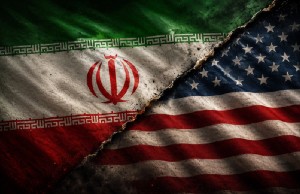
More than four decades after the Tehran hostage crisis, arbitration may offer Iran a legal pathway to challenge the United States’ latest military campaign. On 28 February 2026, the United States, together with Israel, launched a large-scale military operation against the Islamic Republic of Iran under the name “Operation Epic Fury”.[1] The United States has […]
What’s In a Name? “Arbitration” and the NFL Commissioner’s Authority Under the FAA

Few areas of US law are as committed to enforcing private dispute resolution as the Federal Arbitration Act (“FAA”). Since its enactment in 1925, the FAA has required courts to treat written arbitration agreements as “valid, irrevocable, and enforceable,” and it has repeatedly been invoked to pre-empt state laws or judicial doctrines perceived as hostile […]
U.S. Supreme Court Clarifies Personal Jurisdiction in Foreign Sovereign Immunities Act Arbitration Enforcement Cases

On 5 June 2025, the United States Supreme Court issued a unanimous decision in CC/Devas (Mauritius) Ltd. v. Antrix Corp. Ltd., resolving an important procedural question in award enforcement against foreign states and their instrumentalities. Writing for the Court, Justice Alito held that when the Foreign Sovereign Immunities Act (FSIA) applies, federal courts do not […]
Mass Momentum: What’s Next for Mass Arbitration?

In recent years, mass arbitration has emerged as a novel and often controversial tool within United States (U.S.) domestic arbitration. These proceedings occur when a large number of similar individual claims are filed against the same respondent, often a large corporation, creating a high-stakes environment where respondents are forced to either pay substantial administrative fees […]
Which Foreign Investors Could Sue Trump’s United States in Arbitration?

Since taking office for the second time, President Trump has unleashed a torrent of executive orders aimed at reshaping America’s legal and political landscape — from immigration and climate change to trade, civil rights, energy policy, and tariffs.[1] His unpredictable approach to governance has sparked domestic and international concerns, particularly among foreign investors who may […]
Document Production in International Arbitration

Document production is one of the most controversial yet essential steps in international arbitration. Since cases are generally decided based on documents rather than oral testimony, document production can be a powerful tool for discovering evidentiary material crucial to winning an arbitration.[1] It is not surprising that arbitral proceedings commonly include a document production phase. […]
