

The assignment of arbitration agreements has been the subject of multiple rulings by domestic courts of various countries. This body of case law, with its own principles, is not directly applicable to assignment in investment arbitration. Assignment is the transfer of rights, property or other benefits from an assignor to an assignee. In investment arbitration, […]
Investment Arbitration
Judicial Expropriation in Investor-State Arbitration

Investor-State arbitrations involving unlawful expropriation are often concentrated on acts from a State’s legislative or executive branch. In this configuration, acts such as executive orders or laws are how a State may expropriate foreign investors. In turn, a lesser-known type of expropriation is judicial expropriation, which can be defined as “[t]he taking of contractual and […]
Environmental Concerns in Investment Arbitration

Traditionally, investment arbitration and environmental protection existed in separate spheres, with the former primarily focused on protecting the rights of investors and the latter concerned with safeguarding the environment. However, this separation has blurred as environmental issues have gained prominence on the international stage. In recent years, the intersection of environmental concerns and investment arbitration […]
Intra-EU Investment Arbitration After Achmea

This note looks into the reality of intra-EU investment arbitration after the judgment of the Court of Justice of the European Union in Achmea. Achmea was initially referred to as a groundbreaking decision, which caused further steps to be taken to prevent intra-EU investment arbitration. However, recent decisions and judgments may call into question the […]
Enforcement of Investment Arbitration Awards

International investment arbitration has emerged as a vital component of international business law, offering a specialised mechanism for resolving disputes between foreign investors and host States of investment. The enforcement of investment arbitration awards is one of the most critical aspects of the dispute resolution process. Unless the decisions reached were legally binding and effectively […]
Free Transfer Principle in Investment Arbitration

Among the principles ensuring the protection of foreign investments, bilateral investment treaties (“BITs”) typically include the free transfer principle regarding the transfer of funds/returns of the investments into and out of the host State of investment. One of the primary objectives of BITs is to provide a stable and predictable legal framework that boosts the […]
Renewable Energy Arbitration

Climate change is one of the most concerning phenomena in today’s world. One of the tools almost every country is using to combat global warming is to incentivize the use of renewable energy sources, as opposed to the use of fossil fuels. Humanity has relied on fossil fuels without taking into consideration the long-term consequences. […]
Climate Law in Investment Arbitration – Two Sides of the Same Coin

The role of climate law in investment arbitration is a problematic issue. Even though environmental consciousness and sustainability are increasingly important in today’s world, and investment arbitration tribunals have also recently recognized the importance of adjusting investment law to support the goals of climate law, there seems to exist a clash between the two fields […]
Assessing and Forecasting Costs in Investment Arbitration
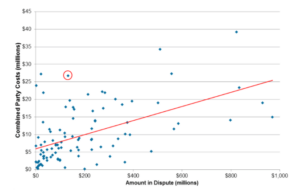
Many variables can influence the costs of investment arbitration. While the costs of parties’ counsel and the arbitral tribunal’s fees are far from trivial, other potential variables may be useful to assess and forecast the costs of investment arbitration disputes. In this post, we will explore how some variables may impact the parties’ overall costs […]
